1. The Shape on the Screen
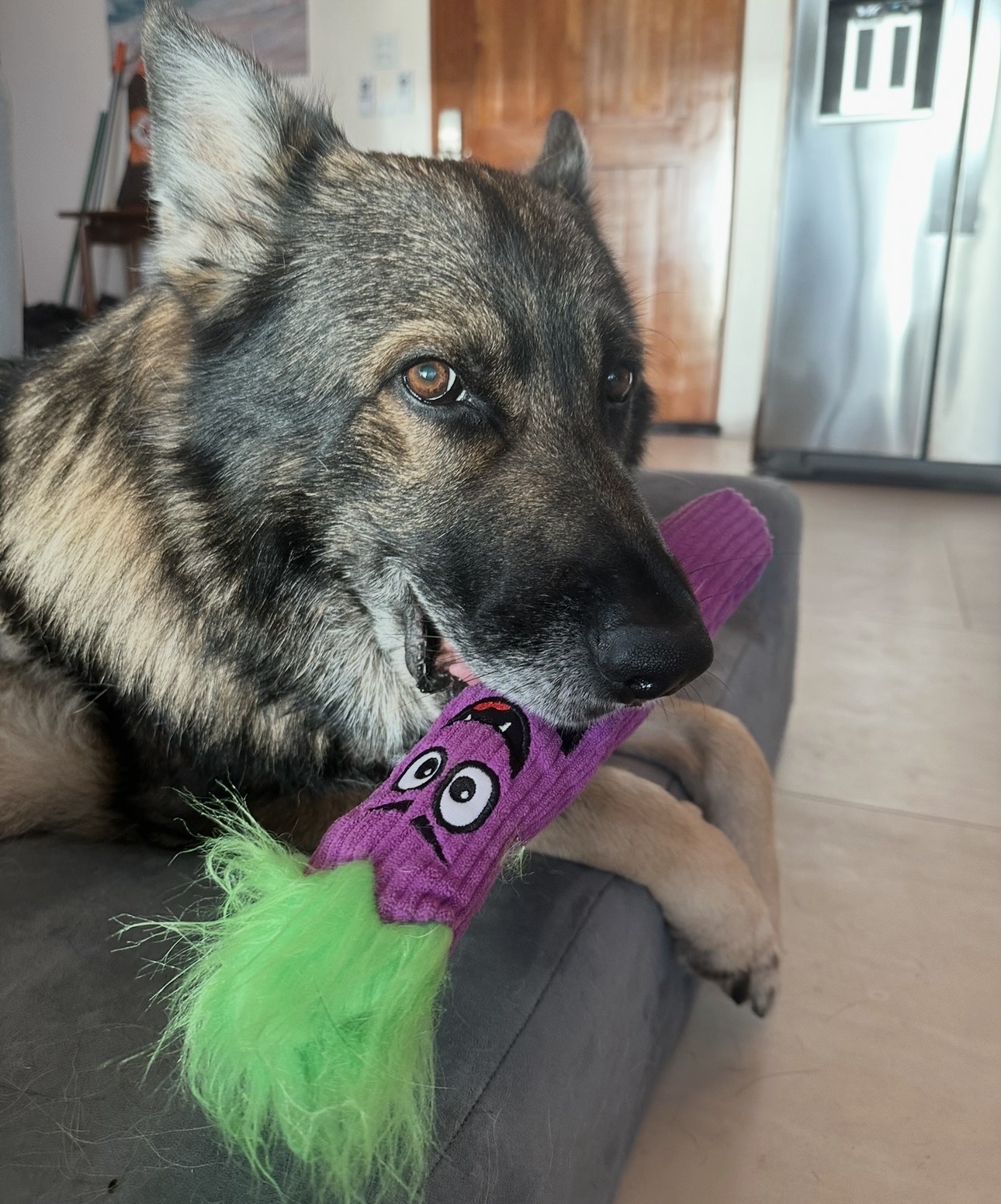
On April 3, 2025, Oscar became a cancer patient.
Not slowly. Not in the abstract way where something is off and everyone agrees to keep an eye on it.
There was an ultrasound. There was a mass. There was a place where the mass was sitting.
Bladder. Trigone. Proximal urethra.
I did not know yet how much those words would matter. I knew “bladder cancer” was bad. I did not yet understand that the location could be as dangerous as the diagnosis itself. The trigone is where urine enters and leaves the bladder. It is not just another patch of tissue. It is plumbing. It is pressure. It is the difference between a dog who can pee and a dog who suddenly cannot.
The April ultrasound described a solitary heterogeneous irregular mass along the caudal dorsal bladder wall, extending into the trigone and proximal urethra (± distal left ureter). It measured about 3.2 cm long × 1.3 cm thick. There was marked left renal pyelectasia (~1 cm) with a dilated left ureter. The prostate was symmetrically enlarged (~6.27 cm width).
BRAF mutation testing came back positive in April 2025, prior to the oncology consult. That helped lock in the urothelial/TCC picture before we had the full tumor DNA map.
That was the first thing I learned: cancer is not one word. It is a location, a pathway, a set of risks, a schedule, a body, a dog.
Oscar was a German Shepherd. Big, black and tan, intact male, serious-looking until you knew him. He had always had an unusual way of urinating, almost pulsatile. For years it had just been one of those Oscar things. After the ultrasound, every habit became data.
The prognosis was not long.
“Maybe six months,” with chemo.
That was the number.
I remember what a number like that does. It does not just tell you about the future. It rearranges the present. A walk is no longer just a walk. A meal is no longer just a meal. The dog lying next to you is still there, breathing, warm, himself, but your mind starts counting.
What I did here
I did not accept the number as an instruction to wait. I accepted it as the starting point. I started saving reports, asking for records, tracking symptoms, and using AI as a research and organization layer so I could bring better questions to my oncologist. The AI did not replace my oncologist. See the method →
2. The Same Day I Decided
The decision happened the same day as the diagnosis.
It was not dramatic. I did not feel brave. I felt cornered.
But I knew one thing: I was not going to sit there hoping that a very busy specialist, with hundreds of patients and too little time, could hold every detail of Oscar in her head every hour of every day.
That was my job.
My oncologist was the doctor. I was the person who lived with the patient. I saw the morning pee, the appetite hesitation, the way he settled, the way he shifted, the way he looked when something was wrong before it became obvious enough to describe.
So I made a system.
At first it was messy. Screenshots. Lab PDFs. Medication questions. Notes about vomiting. Questions about piroxicam. Questions about omeprazole. Questions about urine. Then more questions. Then molecular testing. Then chemotherapy. Then bloodwork. Then more bloodwork.
The archive became long and ugly because cancer does not arrive in neat folders.
But the method was simple:
Collect everything. Feed it into one place. Ask what changed. Ask what mattered. Ask what could hurt him. Compress the answer into something my oncologist could review. Do one thing. Then measure again.
That loop became the only thing that made me feel like I had control.
Not control over cancer. I never had that.
Control over the work.
What I did here
I turned fear into a monitoring loop: collect → feed → ask → compress → review with oncologist → act → re-measure. That became the operating system for the next 439 days. Use the method →
3. Waiting for the Map
While we waited for the tumor DNA report, my oncologist started treatment.
There was no time to wait passively for perfect information. Oscar had a tumor in a dangerous location. We needed motion.
IV chemotherapy was started while the DNA report was pending. Oscar received one IV dose of mitoxantrone on May 1, 2025. After the DNA results returned, my oncologist switched him to carboplatin plus olaparib on May 22, 2025.
Then the molecular report came back.
That report changed the way I understood the cancer. It did not make the cancer less serious. It did not promise anything. It did not say Oscar would be saved.
It gave us a map.
The Vidium SearchLight DNA report (Accession SL25-000232; received 05/05/25; reported 05/12/25) listed site as trigonal urethral and diagnosis as urothelial carcinoma. Matching drugs on the report — including olaparib, platinum, trametinib, sirolimus, and others — were a question map for my oncologist, not a prescription list.
The tumor had BRCA1 copy-number loss, which suggested a weakness in DNA repair. That made platinum chemotherapy and PARP-inhibitor logic worth discussing.
It had PDGFRA copy-number gain, which pointed toward growth-factor signaling and made receptor tyrosine kinase targeting a rational question.
It had an NF1 frameshift (p.Ser1045fs), which mattered later, because NF1 normally helps restrain MAPK growth signaling. If that brake is broken, a MEK inhibitor like trametinib becomes a rational late-stage question.
It had TSC2 copy-number loss, which pointed toward mTOR signaling and made sirolimus something to discuss carefully with my oncologist — not something to add blindly. ABCB1-1Δ was not detected. Sirolimus was later prescribed/discussed in May 2026 but was never started.
This was when the cancer stopped being a monster in the dark and became a set of broken switches.
The DNA report did not give us a cure. It gave us a map.
What I did here
I converted the DNA report into a mutation → pathway → treatment-question map. Every idea still went back to my oncologist. See the DNA report page →
4. The First Hard Phase
The first treatment phase was not clean or simple.
There was mitoxantrone while we waited for the DNA report — one IV dose on May 1, 2025. Then, starting May 22, 2025, carboplatin plus olaparib under my oncologist's direction. Carboplatin continued across multiple treatments (including at least May 22, June 11, July 3, and July 24). This page does not publish numeric chemo doses.
That distinction shaped everything: Oscar could not understand future benefit. He only had today. If today was nausea, pain, fear, weakness, and no food, then the treatment had failed him even if it looked clever on paper.
So every decision had two columns: Could this help the cancer? Could Oscar still be Oscar while we tried?
I wanted synergy. I wanted the molecular logic. I wanted supplements that made sense. I wanted anything that could help.
But the rule became discipline, not desperation. One change at a time. No supplement was allowed to be “natural, therefore safe.”
Turkey tail, Avmacol/sulforaphane, fish oil, probiotics, joint support, GI support — each had to be screened. What is the mechanism? What is the evidence tier? What could it interact with? What lab would show harm? Would my oncologist approve it?
What I did here
I used AI to screen treatment-adjacent ideas before bringing them to my oncologist. The transferable lesson is not the supplement list. It is the screening method. See supplements →
5. Remission, Plainly Said
On July 3, 2025, my oncologist assessed a strong partial to complete response of the urinary tumor — unable to clearly visualize any cancer on the trigone or urethra.
That is the sentence.
Not a miracle speech. Not a movie scene. Just that.
She could not clearly see it there.
The tumor that had been sitting in the bladder/trigone/proximal urethra — the thing that had turned the future into “maybe six months” — had almost completely resolved at that site. Radiology summary language put it this way: mildly progressive pulmonary metastatic disease but almost complete resolution of the bladder tumor.
I do not want to overstate what that meant. It did not mean Oscar was cured. It did not mean whole-body remission. It did not mean there was no microscopic disease. Pulmonary nodules were still present. It did not mean I could stop watching.
But it meant the treatment had done something real at the bladder/trigone/urethra site — a strong local response, while the lungs still had disease.
What I did here
I treated the bladder-site response as a milestone, not permission to stop. The question changed from “Can we get a response?” to “How do we maintain control and keep him himself?”
6. Stable Disease Is Still a Victory
By September 4, 2025, thoracic radiographs — compared to July 24, 2025 — showed stable pulmonary metastatic disease.
That phrase can sound disappointing if you have never lived with metastatic cancer. But when the disease has already reached the lungs, “not growing” can be a gift. It means time. It means more walks. More meals. More mornings.
My oncologist had discontinued carboplatin and added Palladia after the lung lesions had been slightly larger. Oscar was on Palladia plus olaparib at home. The September 4 study was about three weeks after starting Palladia, to reassess the lung nodules. A board-certified veterinary radiologist read the films: nodules were similar in number to the prior study and measured up to about 2.7 cm; several had a small air-filled / cavitary center, which the radiologist noted may represent focal necrosis. The important part, for me, was that the lung disease was not racing ahead.
Oscar was still Oscar.
That became the long middle of the story.
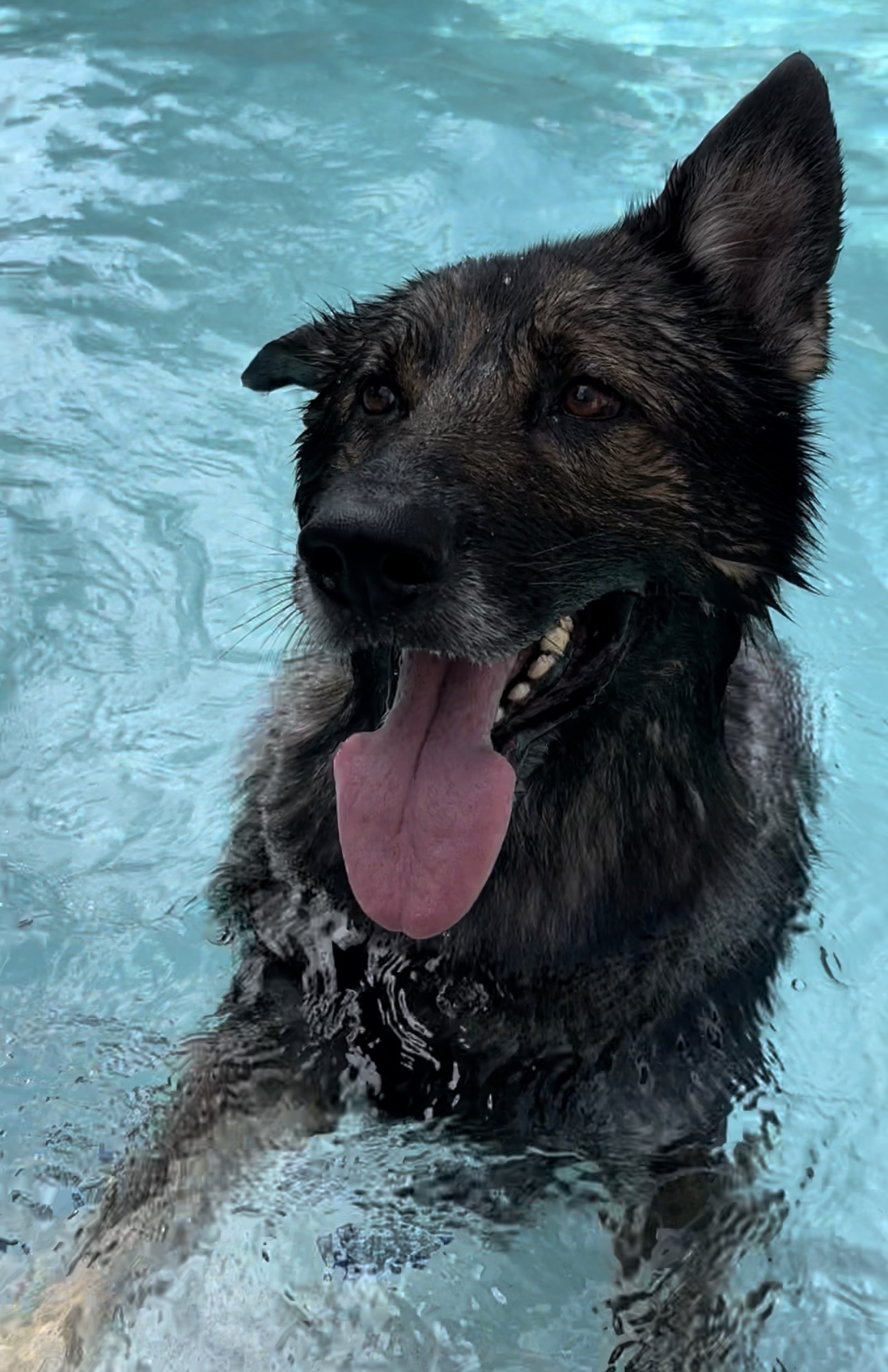
Oscar swam in the ocean. Beach days had a rhythm. A long walk. A swim at the destination. A slow walk back. Not because he was weak then, but because that was the pace of a good day. The kind you would never think to write down if you did not know what it cost to get it.
He ate. He rested. He walked. He wanted what he wanted. He was himself.
What I did here
I learned not to dismiss stable disease. The AI helped me compare scans and labs without turning every imperfection into panic. My oncologist interpreted the imaging. I tracked whether the result translated into actual life.
7. The Monitoring Became the Medicine Around the Medicine
The treatment mattered. The drugs mattered. The oncologist mattered. But the monitoring mattered too.
During the Palladia/olaparib phase, the bloodwork showed why. Week-one labs were acceptable. Then the platelet number dropped sharply on the next check. The analyzer showed platelets around 93 K/µL, with a smear estimate closer to 130 K/µL. He did not look like a dog in crisis. But the trend mattered.
The point was not to panic. It was to ask the right question early. Should Palladia be held? How quickly should we recheck?
Palladia was held pending recheck. The platelets improved. Later they were back around 201 K/µL.
That was the method working — not because AI treated anything. It worked because the pattern became visible before it became a disaster.
What I did here
I watched trends, not just red flags. A number can still be inside or near a range and still be moving in the wrong direction. Monitoring loop →
8. When the Cancer Moved
For most of the journey, Oscar stayed himself. Then, near the end, the cancer changed the terms.
He developed a lesion near the outside of his anus. At first, there were other possibilities. Anal sac problem. Abscess. Infection. Something local and fixable.
There was a crater-like, raised lesion. There was a deeper lump behind it. There was restlessness. Hind-leg weakness. Blood streaking the outside of stool. Cloudy urine. Licking. Pain that seemed to live somewhere in the pelvis, rear end, or urinary tract.
Some of it improved on amoxicillin-clavulanate and gabapentin. That made infection or inflammation feel plausible. And some part of that probably was real. His urine later showed major inflammation. But the lump and lesion were not just an infection.
Cytology came back as metastatic urothelial/TCC.
That was one of the hardest pivots. Because when a wound is cancer, it does not behave like a normal wound.
I had to stop asking, “How do we heal this completely?” and start asking, “How do we keep this clean, dry, less painful, and less irritating?”
What I did here
I used the AI to separate possibilities: tumor wound, secondary infection, urinary inflammation, stool friction, medication effect, and pain. Both cancer and inflammation could be true at once.
9. The Urine Was Not a Small Detail
Around the same time, Oscar's urine changed. It could start clear, then become cloudy toward the end of the stream. That detail mattered.
The oncology culture had shown no growth, but the urine was so turbid that the rapid culture could not be performed. Also, Oscar had already been on antibiotics before the culture, which made “no growth” less final than it sounded.
So we did the missing test. The UA/UPC showed yellow turbid urine, specific gravity 1.023, pH 5.5, protein 3+, occult blood 3+, WBC greater than 50 per high-power field, a few RBCs, no bacteria seen, and UPC 2.3. The report warned that UPC must be interpreted with the urine sediment because blood or inflammation can elevate it.
That result did not give us a simple answer. It did not prove a clean UTI. It did not prove the protein was primary kidney disease. But it showed something important: Oscar's urinary tract was inflamed.
What I did here
I asked what the culture did not tell us. That led to UA/sediment/UPC, which showed marked urinary inflammation and changed the comfort-monitoring plan.
10. The Last Rational Shot
By the final phase, Oscar had already beaten the original number by a wide margin. He had gone from “maybe six months” to more than a year. The bladder/trigone/urethra tumor had shown a strong site response by July 3, 2025. The lung metastases had later stabilized. He had lived the long middle as himself.
But cancer adapts.
The DNA report still had one major path left: NF1 and the MAPK pathway. That is where trametinib came in — a targeted MEK inhibitor, a rational option because of the NF1 p.Ser1045fs finding in the original tumor profile. Exact first swallow date is still a soft gap.
Palladia was stopped or held in this phase. Olaparib remained part of the background protocol context. Sirolimus was prescribed/discussed in May 2026 because of TSC2/mTOR logic, but it was never started.
At first, there were encouraging signs. Oscar seemed more comfortable lying down. Overall restlessness went down. The deeper lump behind the lesion seemed to shrink.
But the surface lesion did not simply vanish. By day 16 to week 4, the pattern became clearer: he could be more comfortable at rest while getting worse with movement.
What I did here
I separated resting comfort from movement pain. A drug can help one domain and fail another. That is why the late phase became less about adding more cancer drugs and more about palliative pain control and QOL thresholds.
11. The Body Tells the Truth in Small Ways
Near the end, Oscar still ate, but sometimes he was slow to start. So I changed the food. Cooked beef on kibble. Shredded cheese. The practical things you do when perfect nutrition matters less than getting him to want the bowl.
His hind legs got weaker when he squatted. He became wobblier the longer he was up. His hair stood along his spine when he walked or tried to poop.
He stopped walking around comfortably. He avoided movement except going out to pee or poop. Then he would go back to bed.
And this is where the hardest question lives: Is a dog enjoying life if most of life is lying down?
The honest answer is: sometimes, yes — if lying down is peaceful, if he still wants food, if he still wants your hand, if rest is real rest.
But there is a line. If the only things left are pain, forced movement, difficult potty breaks, fear, nausea, and sleep that looks more like exhaustion than peace, then we are no longer buying time for the dog. We are buying time for ourselves.
What I did here
I stopped asking only, “Is the cancer treatment working?” and started asking, “Is Oscar's day still worth having from Oscar's point of view?”
12. The Last Week or Two
Oscar was fully himself until the last one to two weeks.
That is important. This was not 439 days of suffering. That is not what happened.
He had beach days. Ocean swims. Long walks. Slow walks back. Food he wanted. Sleep. Normal routines.
Then the end came quickly enough to be clear and slowly enough to make me question everything.
We talked about pain medication. Gabapentin. Amantadine. What would help for hours. What might make him too sedated to move. What could let him have one more car ride, one more window ride, without turning comfort into side effects.
That was the final shape of the work. Not cure. Comfort.
On June 16, 2026, Oscar was euthanized.
He lived 439 days from the day the mass was found.
The prognosis had been “maybe six months” with chemo. He got more than that. But more important than the number is what the number contained: a strong response at the bladder/trigone/urethra site, later stable lung disease, swimming, the beach, long walks and slow walks back, meals and sleep and days where he was not a cancer story at all. He was just Oscar.
What I did here
The final decision was not a failure of treatment. It was the last treatment: choosing not to let the cancer take the ending by crisis, obstruction, panic, or uncontrolled pain.
13. What This Was For
I am building this because I needed something like it on April 3, 2025.
Not a miracle page. Not a supplement stack. Not a promise that if you do everything right your dog will live.
I needed a method.
Oscar's story does not prove that every dog can do what he did. It does not prove that his protocol should be copied. It does not make AI a veterinarian. It does not make supplements safe. It does not turn cancer into a puzzle that can always be solved.
It proves something smaller and more useful.
A frightened owner can become organized. An organized owner can ask better questions. Better questions can make appointments better. Better monitoring can catch risk earlier. A molecular report can become a map. A busy oncologist can be supported by a prepared owner.
And sometimes, that work buys time.
Real time. The kind where a dog gets to swim in the ocean.